
Step into any room, and with the right lighting installation, you can change the whole vibe think cosy movie nights, energising work mornings, or party mode at the flick of a switch. In Melbourne’s fast-paced scene, smart lighting is more than a trend: it’s a way to make your home or office feel modern, efficient and downright cool. I remember fumbling for a switch one dark winter evening until I swapped it out for a voice-controlled bulb; suddenly saying “lights on” was a morning ritual, not magic.
Today’s smart lighting ideas span sleek LED strips, motion-sensor security lights, colour-changing fixtures and more. This guide dives into creative smart lighting installation concepts, practical tips (Melbourne-style), and even technical know-how so you can upgrade any space easily and safely.
Voice-Controlled Smart Bulbs: Speak, Light, Enjoy
Walking into your flat with your hands full and saying, “Alexa, turn on the lights,” and instantly watching the room brighten feels like a small luxury that quickly becomes part of everyday life. That’s the appeal of voice-controlled smart bulbs.
These modern lighting systems replace standard bulbs and connect to your home network through Wi-Fi or a smart hub, allowing you to dim, brighten, schedule, or change colours using your phone or voice assistant. A smart lighting installation not only adds convenience but also gives your space a sleek, modern atmosphere that feels both stylish and practical
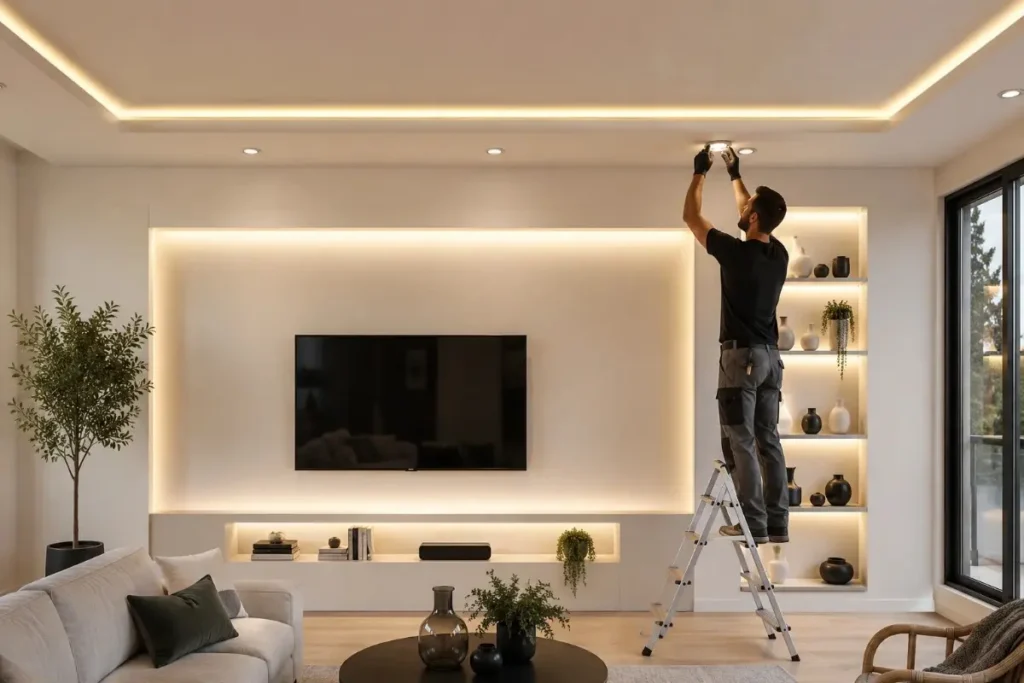
- Installation Tip: Swapping in a smart bulb is usually as easy as screwing in a new lamp many are just Zigbee or Wi-Fi bulbs that fit standard fittings. Download the bulb’s app, connect it to your home Wi-Fi or smart home hub, and you’re all set. No rewiring needed for basic use. (Of course, if you’re adding a hub or rewiring a switch, call a licensed electrician – even a voice assistant wouldn’t want you risking code issues.)
- Where It Works: Try them in living rooms for movie nights, or in the kitchen and bedroom to sync with routines. I love waking up to gradually brighter lights and the smell of coffee brewing a gentle start rather than a jolt-you-awake.
These bulbs also work perfectly with a modern lighting installation setup because they love schedules and automation. You can program them to dim every night at midnight or turn blueish (cool white) in home offices to keep you alert during deadlines. Smart bulbs often claim serious energy savings too. LED smart bulbs use only about 20% of the power of an old halogen bulb and last 5–10 times longer. In short, upgrading your lighting installation with smart LEDs is an instant win for efficiency, comfort, and style.
Ambient LED Strips: Mood and Depth
Want to add a splash of colour or soft glow in a subtle way? LED strip lights are your best friend. These flexible, adhesive strips go under cabinets, along shelves, behind your TV or bed headboard – anywhere you need a gentle wash of light. They give rooms depth and drama without harsh overhead glare. In a Melbourne apartment, for example, you could stick strips under kitchen cupboards for a clean countertop glow, or behind the TV to reduce eye strain and add ambience.
- Creative Uses: Behind mirrors or along wall edges for a futuristic “halo” effect. Around bookcases to highlight decor. Even on the ceiling perimeter (cove lighting) to make rooms feel bigger. Set them to sync with music or seasons: cool blue during work hours, warm orange in the evening, or rainbow mode for parties.
- Practical Benefits: LED strips are crazy energy-efficient (far less power than old bulbs), and many come with built-in dimming and schedules. Combined with smart home systems, you can have a whole batch of strips that automatically change through the day. They’re often low-voltage (usually 12V or 24V), but for a clean job you might run them back to a safe transformer or driver behind a cabinet – a job for an electrician if you’re not comfortable with home wiring.
In terms of mood, think of LED strips like the underlighting on a fancy car subtle but oh-so-sleek. In a lounge, I once ran a strip along the ceiling trench, and it suddenly felt like a designer penthouse. And since LEDs produce minimal heat, they’re safe around kids and pets when installed properly. Just stick them on, hide the cables, and enjoy the modern vibe.
Motion-Activated & Timed Lights: Convenience and Safety
Ever tripped up the stairs at night, cursing yourself for not flipping the switch? Motion sensors are one of the smartest lighting installation upgrades for modern homes. Installing motion-activated lights in hallways, bathrooms, or entryways adds both automation and safety. You walk in, the lights turn on. You leave, they switch off. Simple. This type of lighting installation instantly improves convenience for busy families or anyone who constantly forgets the switch (I’ve definitely been there). It also helps seniors and kids move around safely in the dark while keeping your home energy efficient at the same time.
- Where to Place: Hallways, staircases, garages, back entrances – anywhere foot traffic goes. Also outside: a PIR floodlight above the garage or backyard can illuminate paths when you come home late and scare off unwanted guests.
- Energy Savings: Because they only light when needed, these sensors cut wasted on-time. Paired with LED lamps, motion lights can reduce electricity use significantly. (In fact, in industrial settings, simply installing motion sensors is one top “energy-saving solution” for big facilities.)
- Integration: For high-tech flair, wire the sensor to a smart hub so it can trigger LED strips or even color lights inside when you enter. your front porch sensor flicking on a welcome-home light scene at dusk comfort and peace of mind rolled into one.
In Melbourne’s climate, motion lights outdoors also boost security. One client I know had solar-powered sensor lights installed around the deck. It’s a step-by-step CCTV deterrent: lights ON at the slightest movement, good enough for most intruders.
Colour-Changing & Mood Lighting: Paint with Light
Lights aren’t just white anymore. Modern installations let you splash any colour across a room. You can install RGB or tuneable-white bulbs/strips that shift through the spectrum or dial from warm to cool. It’s like having a paintbrush you can swipe across the walls and ceiling. For instance, a soft pink or orange glow makes dinner feel cosy, while bright blues/greens can energise a home gym or workspace.
- Setting the Mood: Hosting a small gathering? Cue purple and green lights for a lounge bar feel. Working late? Switch to crisp white or even blue-tinged light to stay alert.
- Circadian Benefits: Many smart bulbs let you program “circadian” schedules – bright cool light in the morning, gentle warm tones as bedtime nears – which can actually help your body clock. So the right lighting installation not only looks good but also may improve your sleep/wake cycle. (TIP: In Australia’s strong sunlight, cooler hues can mimic daylight, while warmer hues are like a late summer sunset.)
- Easy Control: The fun part is you can change it literally any day. One Sunday I turned my living room deep blue, and it felt like a mini theatre. Next day, soft yellow for Sunday reading. No need to repaint walls or swap lamps just tweak the colours in an app.
Understanding colour temperature is key: warm whites (2000–3000K) make living rooms feel inviting; cool whites suit offices or garages. For true colour play, Philips Hue, LIFX, Nanoleaf and similar brands let you fine-tune every hue. These lighting upgrades instantly make a space feel high-tech and dynamic.
Decorative Lighting: Style Meets Function
Lighting can be artwork. In smart installations, decorative fixtures (think geometric wall lights, futuristic pendants, or even LED-embedded wallpaper) serve both design and light. For a creative edge, replace a bland hallway sconce with a smart-LED geometric tile, or install smart pendant lights over the kitchen island. These become room highlights while also giving you functional illumination.
- Dual Purpose: Many modern fixtures do double duty: a sculptural wall lamp is beautiful by day, but at night the smart bulb inside lights your art piece or shelf. This merges lighting installation with interior design. The effect is “wow” factor without needing a painter.
- Placement Tips: Entryways and living rooms are prime spots for a designer lamp. A hanging smart pendant over a table can dim for dinner. In commercial spaces (cafés, galleries), you can point smart track lights at artwork or menus, changing focus with a command.
These fixtures often use the same smart bulbs we mentioned earlier – so you still get voice or app control, but in a fancier package. And because they’re style-forward, they bring a contemporary look even before you turn them on. It’s like accessorising your room with function: beauty and light in one.
Layered Lighting for Balance
A pro tip: don’t rely on one light source. Great lighting design layers ambient (overall room light), task (focused work light), and accent (decorative pops). Layered lighting installation ensures your space feels cozy yet functional. For example: combine an overhead smart panel (ambient), a dimmable desk lamp (task), and wall spotlight (accent) in your study. Together they create depth and versatility.
- Ambient: Ceiling LEDs or downlights for general illumination. Smart panels or recessed RGB lights provide a base glow. These let you brighten the whole space when needed.
- Task: Desk lamps, under-cabinet kitchen strips, or vanity lights. They ensure you can see clearly for reading, cooking, or hobbies. For instance, an LED strip under kitchen cabinets brightens your bench top without lighting the whole room.
- Accent: Small spotlights or LED strips highlighting artwork, plants, or architectural features. Accent lighting adds drama e.g. a strip behind a fireplace or a small spotlight on a photo.
By mixing these lighting layers and controlling them through your phone or smart switch, you can completely tailor the mood of your space. My home office uses cool white overhead lights for work, a softer desk glow for video calls, and a subtle blue backlight for Netflix mode. This kind of smart lighting installation makes even a compact flat feel flexible, modern, and spa-like. Following a proper Smart Lighting & Energy-Efficient Lighting Guide also helps you create a stylish setup while improving comfort and reducing unnecessary energy use.
Popular Options in Melbourne Homes: Smart bulbs, LED strips (highlights and convenience), and decorative fixtures (style and function) are crowd-pleasers. This “mix-and-match” approach means your lighting scheme isn’t one-size-fits-all – it adapts to whatever you’re doing.
Outdoor and Multi-Purpose Lighting
Lighting ideas aren’t just for the living room. Smart outdoor lighting upgrades instantly boost curb appeal and security. Picture a sensor light by the front door that gently illuminates the porch when you arrive home at dusk. Or LED path lights guiding your garden party guests. In Melbourne, where patios and backyards get plenty of use, waterproof smart LEDs can highlight landscaping or pergolas.
For safety, motion-activated outdoor lights are invaluable: they turn on if someone walks past a window, which is both welcoming (to you) and deterrent (to burglars). Even charging your EV: a well-lit driveway with automated lights means no tripping over cables at night. Many smart systems also allow you to control garden spotlights or pool features in sync with time of day or sunset. It’s the final flourish that makes “home automation” feel complete.
Remember, outdoor fixtures need an electrician for weatherproof installation. But once wired, they plug right into your smart home system. The effect? Your house might look unassuming by day, but by night it’s a tech-savvy, safe oasis glowing on schedule.
Commercial & Industrial Lighting Applications
Smart lighting isn’t just for homes. Offices, shops and even factories can get in on the upgrade. Industrial electrical contractors often lead these projects, especially for big spaces. Think warehouses fitted with smart LED high bay lights: these massively cut power use and can be controlled on timers or sensors. Offices can have automated daylight harvesting: windows let in sun and the smart system dims the indoor lights accordingly, saving more energy.
If you have a business or large home, you’ll likely rely on industrial electrical services or lighting upgrade specialists. They handle everything from planning to installation. Many shops now hire industrial electrical contractors to provide complete lighting upgrades and solutions, replacing old fluorescents with smart LEDs, adding motion sensors in backrooms, and ensuring everything meets Aussie safety standards. For example, a Melbourne retailer saved over $23,000 a year simply by replacing thousands of halogen bulbs with LEDs.
Whether it’s a pop-up café or a home office, the principles stay the same: use quality fixtures, focus on energy efficiency, and work with pros.
Choosing the Right Bulbs and Brightness
When upgrading lighting, match the bulb to the purpose. In smart lighting installation, we usually pick LEDs because they’re efficient and have controllable outputs. Instead of thinking “watts,” think lumens (light output). Here’s a quick guide from Australian standards on how many lumens you need for common uses:
| Lumens (lm) | Use-Case / Brightness Level |
|---|---|
| ~420 lm | Table lamp or soft ambience |
| ~800 lm | General light for a small room |
| ~930 lm | Medium room (living areas, kitchen) |
| ~1300 lm | Large room or bright task area |
It’s surprisingly precise. For example, a 420 lm bulb is good for reading lamps, while a 1300 lm one could light up a garage bench or large lounge. Also check colour temperature: 2700K–3000K (warm white) feels cosy for lounges and bedrooms, whereas 4000K–5000K (cool white) suits workspaces or bathrooms.
Efficiency note: Australian rules have phased out inefficients like incandescents, mandating LEDs and CFLs. Remember our stats: LED bulbs use about 20% of the power of halogens and last many years longer. So that fancy smart bulb might cost more upfront, but you recoup that in energy savings and durability.
Safety and Standards in Lighting Installation
Before you get too carried away, one solid bit of advice: lighting installation must follow Australian standards. That means your wiring, switches and fixtures need to comply with the National Construction Code and AS/NZS wiring rules. In practice, this means hiring qualified electricians for any significant work.
- Licensed Electricians: Always use licensed professionals for installation. They know the local codes (AS/NZS 3000, AS/NZS 1680, etc.) and will install fixtures, motion sensors and switches correctly. For example, a skilled electrician will ensure your smart system’s dimmers are on the right circuits and that any new lights don’t overload the existing wiring.
- Compliance: If you add things like emergency exit lights (required in many buildings by AS 2293) or new external lights, they need to be tested and certified. Industrial electrical repairs services often handle this after installation.
- Home vs. Commercial: In homes you can handle some do-it-yourself smart bulb swaps, but rewiring or adding new sensor wiring? Call an expert. For offices or factories, full lighting upgrades services or contractors take care of planning, ensuring it’s safe and efficient.
Trustworthy electricians also provide warranties and know how to integrate different technologies (like linking smart lights to your home automation or solar setup). This builds confidence that your cutting-edge lighting will be durable and not create a fire hazard. In short, let the pros handle the tricky electrical stuff while you enjoy the magic of the light.
Conclusion
Smart lighting installation takes any space from ordinary to extraordinary – energising or relaxing it with the tap of an app or a spoken word. From swapping in voice-activated LED bulbs and LED strip accents to installing motion sensors or colourful wall sconces, you can instantly upgrade your home or office environment. These modern lighting ideas blend style with savings.
For Melburnians and beyond: yes, these upgrades can boost your property value and mood. And remember, they’re fully in reach. Whether you love tech gadgets or just want lower power bills, there’s a smart light solution for you. Ready to dive in? You might start with something small (like a smart bulb or strip) and see how it transforms your day-to-day. Or if you’re feeling bold, sketch a lighting plan: layer ambient and task lights, throw in some accents, and sit back as your space blooms in a whole new light.
Got questions? Chat with an electrical pro – local experts are eager to help Melburnians modernise their spaces (they offer everything from lighting upgrades and solutions to data cabling and EV charger installation). Your next dinner party might just impress everyone as the room shifts through hues on cue. After all, the only thing better than clever gadgets is clever lighting installation that feels like magic.
FAQs
What is involved in a smart lighting installation?
Installing smart lighting means replacing traditional bulbs or fixtures with smart-enabled ones (LED bulbs, strips, switches). It often involves downloading an app or adding a hub, then pairing the new lights. For major changes (new wiring, sensors, outdoor lights), hiring a licensed electrician is recommended for safety and code compliance.
Can smart lights really save energy?
Yes. Smart LEDs use far less power than old bulbs. For example, an LED uses about 20% of the electricity of a halogen bulb. Smart systems also turn lights off automatically (with timers or motion sensors), reducing wasted energy even more.
Do I need a professional to install smart lighting?
For basic bulb swaps you can DIY, but for hardwired installations or complex setups you should use professionals. Licensed electricians (even industrial electrical contractors for big projects) ensure everything follows AS/NZS standards. They handle new cabling, switches or high-voltage fixtures safely.
Can smart lighting improve home security?
Absolutely. Motion-activated smart lights deter intruders and light up your property only when needed. You can also automate exterior lights on a schedule or with app control, so it looks like someone’s home even when you’re away.
What should I consider when planning lighting upgrades?
Think about each room’s needs (ambient, task, accent). Check brightness (lumens) and colour temperature for each use. Also ensure your switches and wiring can handle the load. If in doubt, consult lighting upgrades services or a qualified electrician to design a scheme that meets both your style and the electrical code.
Which areas of my home benefit most from smart lighting?
Almost everywhere! Common spots include living rooms (dimmable mood lights), kitchens (bright task lighting with under-cabinet LEDs), bedrooms (soft wake/sleep schedules), and hallways (motion sensors at night). Outdoor areas also benefit from smart sensor lights for safety and ambience. Use smart lighting to match each space’s vibe and function.